Principal


Principal



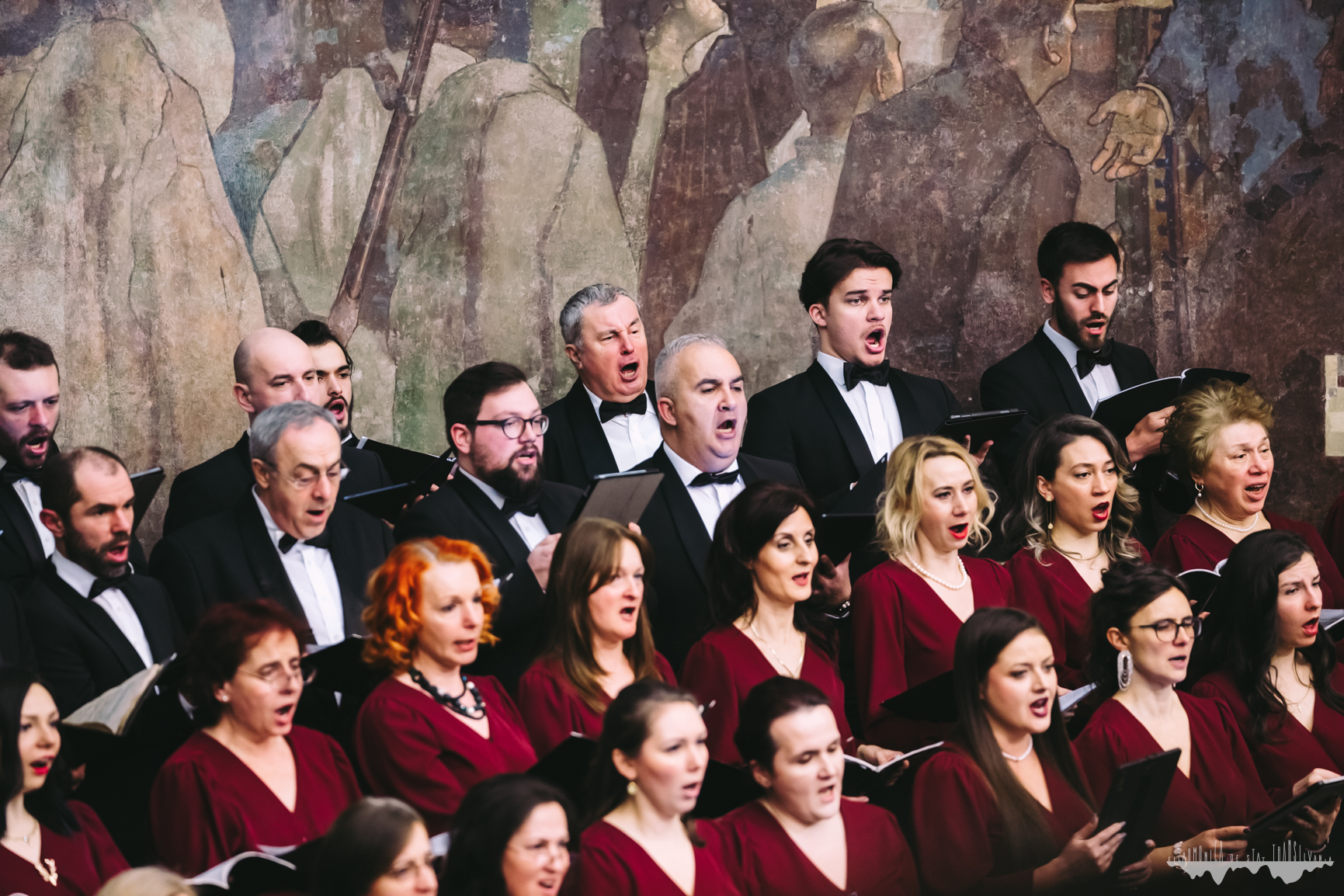
The Choir of the Transylvania State Philharmonic was founded in 1972, during the directorship of maestro Sigismund Toduță, a renowned composer from Cluj and, at the same time, head of a school of composition, whose initiative and perseverance carried great weight in the success of this project. The formation of the ensemble was entrusted to Professor Dorin Pop, a prominent figure in Romanian choral art, whose artistic competence was proven by the spectacular results of this early venture: barely two years after its founding, the Choir of the Cluj Philharmonic was recognized as a national value of the first rank, a position it still holds today.
Dorin Pop pursued higher education in Cluj, where he enrolled simultaneously in the Faculty of Philosophy at the University (with professors including P. P. Negulescu and Lucian Blaga) and at the Academy of Music and Dramatic Art, where he studied with Augustin Bena, Marțian Negrea, Mihail Andreescu-Skeletti, and others. The events of 1940 forced him to choose between the University (relocated to Sibiu) and the Academy of Music (relocated to Timișoara), and so he abandoned his philosophy studies and obtained his degree in music.
He became an assistant at the “Gheorghe Dima” Conservatory, teaching harmony, later moving into conducting and choral ensemble work, his lifelong passion. He steadily developed these disciplines within the Conservatory, soon bringing the institute’s choral ensemble to a near-professional level and establishing a valuable school of choral conducting. In 1955, under the auspices of the Cluj branch of the Romanian Composers’ Union, he initiated the activity of a small choir, which later became the “Cappella Transylvanica” chamber choir, with which he achieved remarkable artistic success both in Romania and abroad, and recorded four albums for the Electrecord record label.
In 1972, Sigismund Toduță entrusted him with the artistic direction of the newly founded Philharmonic Choir. Maestro Dorin Pop left a lasting mark on the ensemble’s personality, from the selection of its members to the consolidation of its vocal timbre and interpretive style. Drawing on the school of choral singing and conducting he had created at the Academy of Music, Dorin Pop managed, in a very short time, to bring the Cluj ensemble to peak artistic levels, unanimously recognized nationally and with substantial international resonance. Starting in 1976, the leadership of the choir was entrusted to Florentin Mihăescu, who had assisted maestro Dorin Pop since the choir’s founding. Under his direction, the choir achieved its first resounding international successes and made major progress in expanding its expressive and repertorial potential. During the 14 years he led this ensemble, at first alongside his teacher Dorin Pop, and from 1975 onward alone, Florentin Mihăescu built a significant repertoire, both vocal-symphonic and a cappella, incorporating numerous works from the universal vocal-symphonic literature, as well as premieres of contemporary Romanian music, the vast majority of them works of great technical and expressive complexity. During this period, the Choir of the Cluj Philharmonic gained recognition both in Romania and abroad. In 1979, conductor Florentin Mihăescu’s appointment to lead the Jugendfestspieltreffen choir at the Bayreuth Festival marked, at the time, an important step in his international professional recognition. Of particular note, however, are the exceptional reviews received in 1980 at the renowned Lucerne Festival in Switzerland, where conductors such as Herbert von Karajan, Lorin Maazel, Sir Georg Solti, and Daniel Barenboim were performing at the time, alongside some of the most renowned European orchestras.
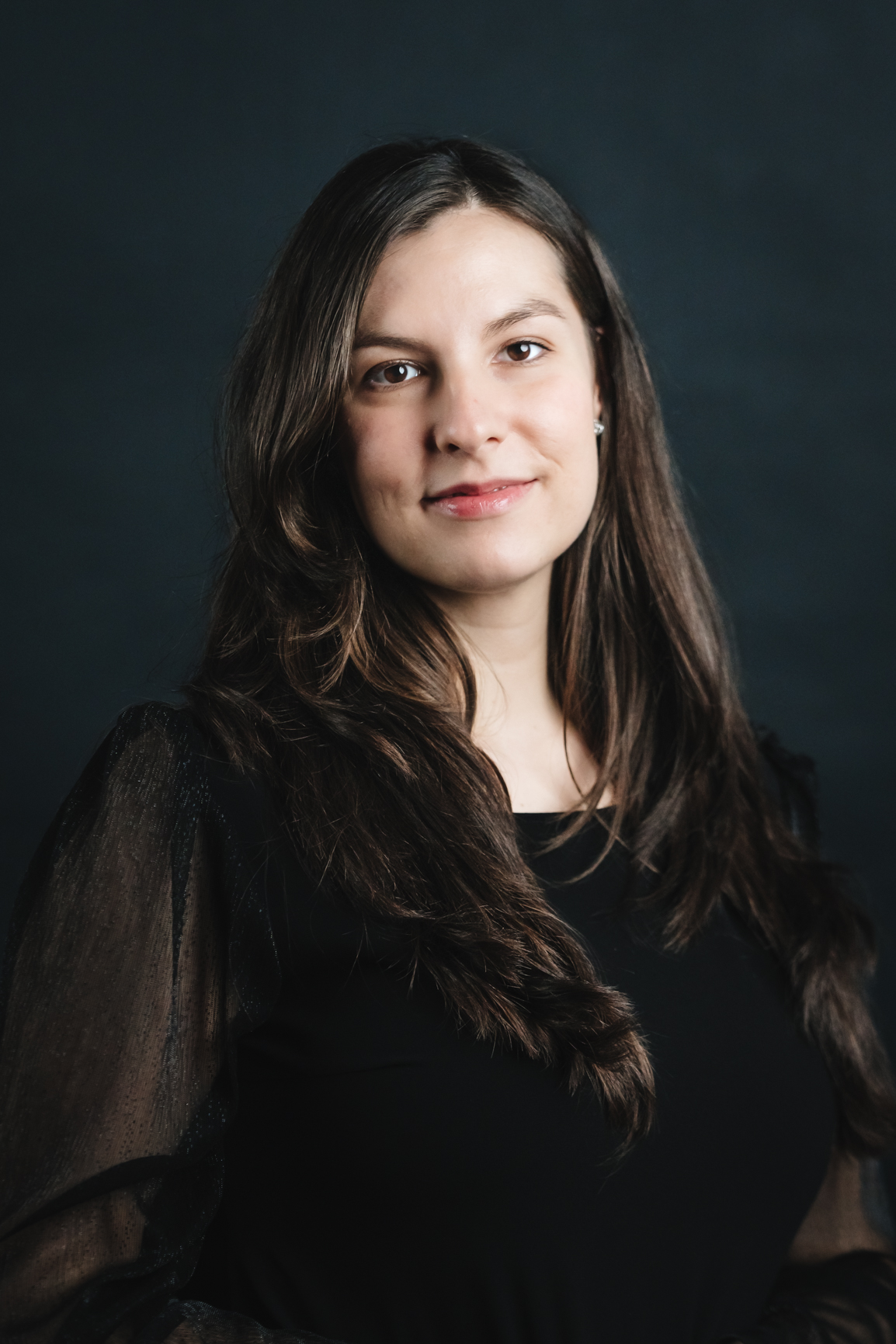
In 1986, the ensemble was taken over by Cornel Groza, a disciple of maestro Dorin Pop. The evolutionary path set by his predecessors has been successfully continued by the current conductor, with the choir marking, throughout all these years, the most prestigious and acclaimed appearances in an international context, and being acclaimed as a world-class ensemble. Cornel Groza (b. 1950) began his musical training at the Music High School in Cluj-Napoca. He then studied music pedagogy at the Academy of Music in our city. In 1970, he became a member of the Cappella Transylvanica chamber choir in Cluj, which, under the leadership of maestro Dorin Pop, had become a distinguished choral “center.” This experience proved decisive in Cornel Groza’s choice to pursue a conducting career.
Through his excellent conducting technique, his thorough knowledge and mastery of choral singing, and his fine sense of sonority, Cornel Groza brings a vital impulse to the enduring success of the Cluj-Napoca Philharmonic Choir.
The ensemble’s radio and television recordings are numerous. Its discography within the complete recording of Johannes Brahms’s vocal-symphonic works (Ein deutsches Requiem, Nänie, and Schicksalslied, with the “George Enescu” Philharmonic Orchestra of Bucharest, under the baton of Cristian Mandeal, produced by Arte Nova) has, since its release, already entered international circulation.
TOURS
The ensemble’s first appearance abroad took place in 1976, in Italy, under the direction of conductor Florentin Mihăescu, and was followed by regular collaborations with the Pesaro and Martina Franca Festivals. A landmark moment was its participation in the Lucerne Festival, on the occasion of the centenary of the birth of composer George Enescu, in 1981. On this occasion, the Orchestra and Choir of the Cluj Philharmonic, alongside an exceptional cast, presented the masterpiece Oedipe, under the baton of conductor Mihai Brediceanu.
Over time, the Choir of the Transylvania State Philharmonic has had the opportunity to collaborate, in vocal-symphonic concerts, with prominent figures of the international musical world, such as Gary Bertini, Valery Gergiev, János Ferencsik, Pinchas Steinberg, Alexandr Dmitriev, Michiyoshi Inoue, Leopold Hager, Maurice Handford, Edward Tschiwjel, László Heltai, Donato Renzetti, Lü Jia, Claus Peter Flor, David Shallon, Antonello Allemandi, and Nicholas McGegan. The ensemble has also collaborated with prestigious orchestras, including the Israel Philharmonic Orchestra, the Tonhalle-Orchester Zürich, the RTL Orchestra Luxembourg, the Orchestre National de Lorraine, the Kuala Lumpur Philharmonic Orchestra, the “George Enescu” Philharmonic Orchestra of Bucharest, the International Orchestra of Italy, the Jerusalem Symphony Orchestra, and the Malaysian Philharmonic Orchestra.
The choir has appeared at the most important festivals in Romania, such as the “George Enescu” International Festival in Bucharest, the “Cluj Musical Autumn” Festival, the American Music Festival in Cluj-Napoca, the “Mozart” Festival, and the “Cluj Modern” Festival. The ensemble’s reputation has been consolidated through tours abroad and appearances on major European and international stages, in Berlin, Düsseldorf, Zürich, Lucerne, Tel Aviv, Jerusalem, Ravello, Pesaro, Macerata, Naples, Madrid, Barcelona, Córdoba, Luxembourg, and Assisi.
An important direction in the ensemble’s repertorial activity is the alternation between vocal-symphonic projects and opera and a cappella work, with particular emphasis on promoting Romanian creative work, both on stages at home and abroad. In this regard, alongside the presentation of the opera Oedipe at the Lucerne Festival, a landmark moment remains the world premiere of the opera Meșterul Manole by Sigismund Toduță, presented at the “Cluj Musical Autumn” Festival in 1986, under the baton of conductor Emil Simon.
The collaborations of the Transylvania State Philharmonic Choir in staged opera productions began as early as the 1970s-1980s, through invitations received to the Martina Franca and Pesaro Festivals in Italy. Among the more recent projects, notable are its participations at the Caesarea Festival in Israel in 2000, with the opera Turandot by Giacomo Puccini, in collaboration with the New Israeli Opera Tel Aviv, as well as at Ehrenbreitstein, Germany, also in 2000, with the operas Nabucco and Aida by Giuseppe Verdi, in collaboration with the Koblenz Theatre.
The ensemble’s participations at the “Liturgica 2000” Festival in Jerusalem, at the inauguration of the Terraces of the Baha’i Temple in Haifa in 2001, as well as at the Schwetzingen and Bad Wildbad Festivals, were events of international resonance. In 2003, the name of the Cluj choir appeared in the credits of the film The Passion of the Christ, directed by the renowned filmmaker Mel Gibson, for whose soundtrack recordings were made in Cluj-Napoca.
The Philharmonic Choir is frequently invited to the “Festival della Valle d’Itria” in Martina Franca, where it has, over time, taken part in productions of operas such as La donna serpente by Alfredo Casella, Medea in Corinto by Giovanni Simone Mayr, and Francesca da Rimini by Saverio Mercadante, all under the musical direction of conductor Fabio Luisi and released on DVD.
In recent years, the Choir’s tours in Asia have included collaborations with the Malaysia Philharmonic Orchestra of Kuala Lumpur, the Singapore Symphony Orchestra and Choir, and the National Taiwan Symphony Orchestra, under the baton of conductors Claus Peter Flor, Lan Shui, and Nicolae Moldoveanu.
One of the Choir’s notable international collaborations was with conductor Iván Fischer and the Konzerthausorchester Berlin. In May 2018, the ensemble performed Beethoven’s Symphony No. 9 in three acclaimed concerts at the Konzerthaus Berlin, in an innovative format, with the choir members placed within the hall, among the audience.
The Choir’s radio and television broadcasts, as well as its recordings, have been well received by specialist critics. Among its notable discography is a Brahms album including Ein deutsches Requiem, Nänie, and Schicksalslied, recorded together with the Bucharest Philharmonic and released on the Arte Nova label.
In 2021, the Choir took part in the studio recording of Puccini’s opera La fanciulla del West, under the baton of conductor Lawrence Foster, released by Pentatone. This was followed by two further studio recordings made in 2023: Verdi’s Un ballo in maschera, under the musical direction of Marek Janowski, and an album featuring Kodály’s Te Deum and Psalmus Hungaricus, alongside Bartók’s Cantata Profana, under the baton of conductor Lawrence Foster.
In August 2023, the Choir recorded Remembering Tebaldi, a tribute to the legendary soprano Renata Tebaldi, featuring soprano Melody Moore as soloist, under the musical direction of Lawrence Foster. In the summer of 2024, the Choir collaborated with EuroArts and the San Francisco Classical Recording Company on two new recording projects. The first, Canto per te, dedicated to Italian canzonettas, features tenor Ștefan Pop alongside conductor Pier Giorgio Morandi, and was released in April 2025. The second recording project is dedicated to Vincenzo Bellini’s opera Norma.
REPERTOIRE
Vocal-symphonic
Johann Sebastian Bach – St Matthew Passion, St John Passion, Christmas Oratorio, Magnificat, Mass in B minor
Béla Bartók – Cantata Profana
Ludwig van Beethoven – Missa Solemnis, Mass in C major, Symphony No. 9, Choral Fantasy for piano, chorus and orchestra
Hector Berlioz – Requiem, Grande Messe des Morts, Missa Solemnis, Roméo et Juliette, The Damnation of Faust
Leonard Bernstein – Chichester Psalms
Alexander Borodin – Polovtsian Dances
Johannes Brahms – A German Requiem, Schicksalslied, Nänie, Alto Rhapsody for alto, chorus and orchestra
Benjamin Britten – War Requiem
Anton Bruckner – Mass in F minor, Te Deum
Luigi Cherubini – Requiem
Paul Constantinescu – Byzantine Christmas Oratorio, Byzantine Easter Oratorio
Liviu Comes – Cântec în piatră
Claude Debussy – Nocturnes
Maurice Duruflé – Requiem
Antonín Dvořák – Requiem, Te Deum
George Enescu – Symphony No. 3, Vox Maris
Gabriel Fauré – Requiem
Charles Gounod – La Rédemption
George Frideric Handel – Alexander’s Feast, Samson, Messiah
Joseph Haydn – The Creation, The Seasons, Missa in Angustiis, Harmoniemesse, Missa Sancti Nicolai, Caecilienmesse, The Seven Last Words of Our Saviour on the Cross
Michael Haydn – Requiem
Tudor Jarda – Din Scripturi
Zoltán Kodály – Psalmus Hungaricus
György Kurtág – Colinda-Baladă
Constant Lambert – The Rio Grande
Franz Liszt – Faust Symphony
Gustav Mahler – Symphonies No. 2, 3, 8 (Choir I)
Pietro Mascagni – Messa di Gloria
Felix Mendelssohn – St Paul, Elijah, Lobgesang
Wolfgang Amadeus Mozart – Requiem, Great Mass in C minor, Coronation Mass, Missa Solemnis, Eine kleine Freimaurer-Kantate, Davide penitente
Marțian Negrea – Recviem-Parastas
György Orbán – Rorate Coeli
Carl Orff – Carmina Burana
Giovanni Paisiello – Magnificat, Messa di Pastorale
Krzysztof Penderecki – The Seven Gates of Jerusalem
Francis Poulenc – Gloria
Giovanni Battista Pergolesi – Stabat Mater
Sergei Prokofiev – Alexander Nevsky
Giacomo Puccini – Messa di Gloria
Sergei Rachmaninoff – The Bells
Maurice Ravel – Daphnis et Chloé (Suites 1 and 2)
Gioachino Rossini – Stabat Mater
Camille Saint-Saëns – Le Déluge
Antonio Salieri – Requiem
Franz Schubert – Mass in E-flat major, Mass in A-flat major
Igor Stravinsky – Oedipus Rex, Mass, Symphony of Psalms
Karol Szymanowski – Stabat Mater
Dmitri Shostakovich – Symphony No. 13, Babi Yar
Sergei Taneyev – John of Damascus Cantata
Lasse Thoresen – Terasele luminii
Sigismund Toduță – Mioriţa, Pe urmele lui Horea
Ralph Vaughan Williams – A Sea Symphony
Giuseppe Verdi – Messa da Requiem, Quattro Pezzi Sacri
Antonio Vivaldi – Gloria
William Walton – Belshazzar’s Feast
Opera
Vincenzo Bellini – Norma, I Puritani
Hector Berlioz – Benvenuto Cellini, The Damnation of Faust
Nicolae Bretan – Luceafărul, Golem
Alfredo Casella – La donna serpente
George Enescu – Oedipe
Liviu Glodeanu – Zamolxe
Tudor Jarda – Pădurea vulturilor
Giovanni Simone Mayr – Medea in Corinto
Saverio Mercadante – Francesca da Rimini
Wolfgang Amadeus Mozart – La Clemenza di Tito
Giovanni Paisiello – Proserpina
Giacomo Puccini – Turandot, La fanciulla del West
Gaspare Spontini – Fernand Cortez
Johann Strauss – The Gypsy Baron
Sigismund Toduță – Meșterul Manole
Giuseppe Verdi – La Traviata, Nabucco, Aida, Simon Boccanegra