Principal
Principal


Principal
Principal

Principal
Principal


Principal
Principal
Principal
Principal
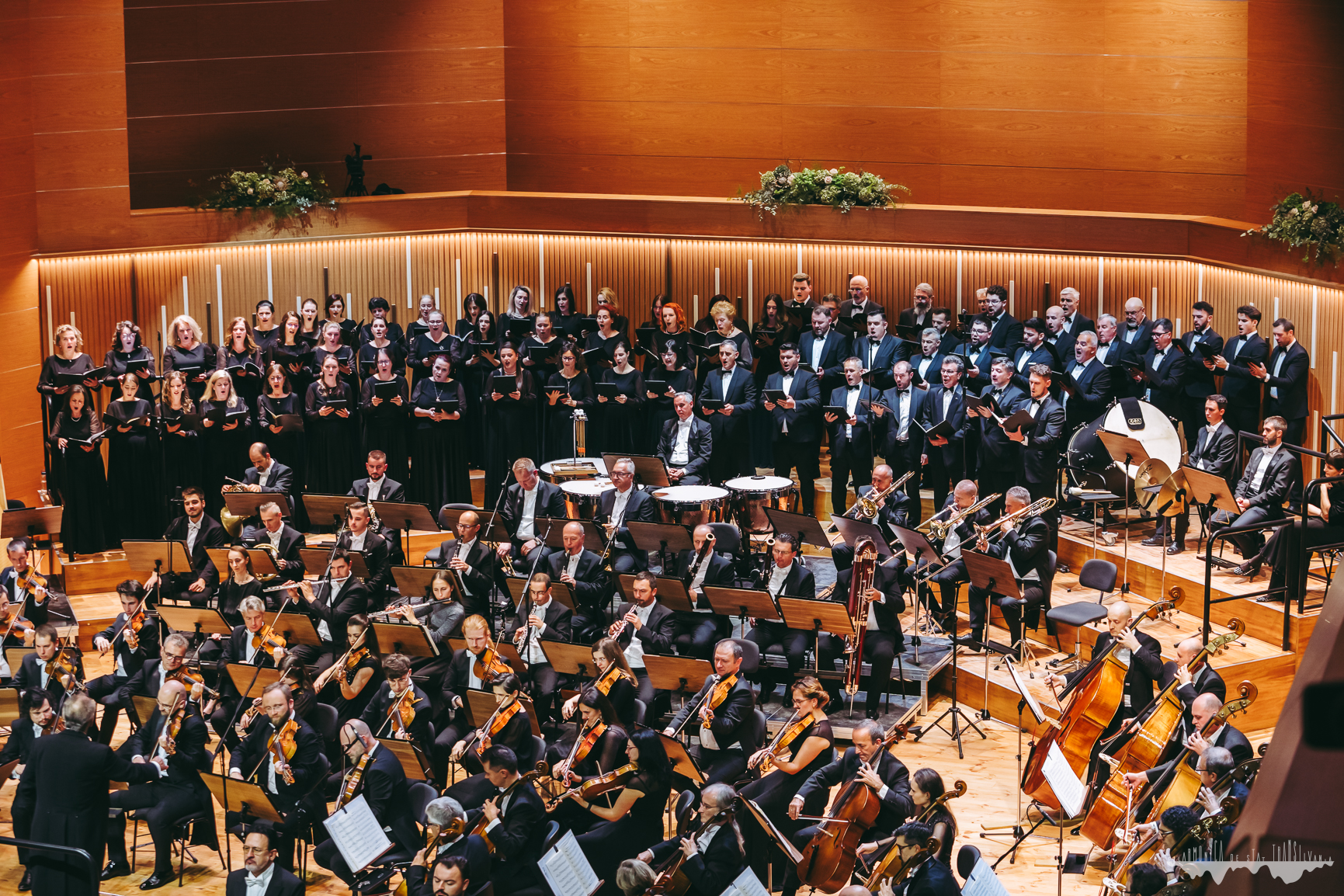
Cluj, a traditional centre of Transylvania, is a city whose profile has always been strongly shaped by the culture that has flourished here – its university, medical and, not least, artistic institutions being well known and highly appreciated not only nationally, but also internationally. It is therefore hardly surprising that, less than ten years after its foundation, the young orchestra had become one of Romania’s leading symphonic ensembles.
The architect of this spectacular rise was the institution’s first conductor, Maestro Antonin Ciolan. A fascinating figure in the musical world, to whom the Transylvania Philharmonic Orchestra owes the brilliance and maturity of its sound, Antonin Ciolan was a professor at the Conservatoires in Iași and Cluj and the founder of the Philharmonic Society of Bessarabia, the Iași Philharmonic and the Cluj Philharmonic. He studied in Dresden, Berlin and Leipzig, where he benefited from the guidance of two legendary masters: Arthur Nikisch and Hans von Bülow.
His entire career was marked by the pursuit of perfection, an ideal he later passed on to his disciples: Petre Sbârcea, Emil Simon, Ervin Acel and Erich Bergel. He was awarded the titles of Emeritus Master of Arts (1963), Emeritus Professor (1963) and People’s Artist (1964).
Maestro Ciolan’s work was continued by two of his most remarkable disciples, conductors Emil Simon (permanent conductor from 1960 and artistic director between 1998 and 2000) and Erich Bergel (honorary artistic director from 1994 until his death in May 1998).
Emil Simon was one of the most highly regarded conductors in Romania. His musical education, entirely rooted in the renowned Cluj school of conducting and composition, was shaped by the scholarly culture of his masters: Antonin Ciolan, for his future profession as a conductor, and Sigismund Toduță, for his great passion, composition, which, because of his constant lack of time, he was able to fulfil only in part.
Emil Simon’s artistic fulfilment was marked, after his years of study, by major achievements and events. In 1964, he won the Grand Prix of the Besancon International Conducting Competition. He then attended advanced courses in Paris with Nadia Boulanger, Olivier Messiaen (musical analysis) and Manuel Rosenthal (orchestral conducting), and took part in advanced training sessions with Sergiu Celibidache in Stockholm, Paris and Prague.
From graduation onwards, for 40 seasons, Emil Simon served as permanent conductor of the Transylvania Philharmonic, diligently cultivating the fine traditions he had inherited and enriching them year after year, so that today’s ensemble unmistakably bears the imprint of his personality. He conducted more than 1,500 concerts and performed over 3,000 scores, a significant number of them Romanian works in first performance.
Erich Bergel, a name closely bound to the artistic destiny of the Transylvania Philharmonic, began his career as a flautist with the Sibiu Philharmonic. He then studied conducting, organ and composition at the Cluj Conservatoire, later becoming principal conductor of the Transylvania Philharmonic. Because of the communist regime, he left for Germany, where he was supported by the renowned conductor Herbert von Karajan, who was impressed by Bergel’s orchestration and completion of the final fugue from Johann Sebastian Bach’s celebrated The Art of Fugue. Between 1971 and 1974 he was conductor of the Nordwestdeutsche Philharmonie Herford, and in 1989 he was appointed principal conductor of the Budapest Philharmonic Orchestra. His career took him on tours with renowned orchestras across the world, to cities including Paris, Auckland, Los Angeles, Berlin, Vienna and Cape Town. From 1994 until his death in 1998, Erich Bergel was Honorary Music Director of the Transylvania State Philharmonic.
Principal conductor of the Cluj Philharmonic between 1980 and 1987, Cristian Mandeal stood at the rostrum of some of the world’s most important orchestras: the Wiener Oper Orchester, Deutsche Oper Orchester Berlin, Staatskapelle Berlin, Staatskapelle Dresden, Dresdner Philharmonie, Münchner Philharmonie, Bayerisches Rundfunk Orchester, Hessisches
Rundfunk Orchester, Oper und Museumsgesellschaft Orchester in Frankfurt, Südwest Rundfunk Orchester in Baden-Baden and Saarbrücken,
London Symphony Orchestra, London Philharmonic Orchestra, BBC London Orchestra, BBC Scottish Orchestra in Glasgow, City of Birmingham Symphony Orchestra, Royal Liverpool Philharmonic Orchestra, RTE-Dublin, Orchestre National de Belgique, Czech Philharmonic, Prague Symphony Orchestra and Prague Radio Orchestra, Slovenian Radio Orchestra in Ljubljana, Orchestra dell’Accademia Nazionale di Santa Cecilia in Rome, RAI Milano, Orquestra Nacional de Catalunya in Barcelona, Israel Philharmonic Orchestra in Tel Aviv, Jerusalem Symphony Orchestra, Gulbenkian Orchestra and the Portuguese National Orchestra in Lisbon, the philharmonic orchestras of Tokyo, São Paulo, Mexico City, Helsinki, Monte Carlo, Copenhagen, Moscow, Warsaw, Sofia, Belgrade and Zagreb, as well as the Gothenburg Symphony Orchestra. Since 2008, Cristian Mandeal has regularly trained and conducted the Romanian Youth Orchestra.
Principal guest conductor between 2008 and 2012, Nicolae Moldoveanu distinguished himself through the refinement with which he chose his concert repertoire on every occasion. His list of collaborations includes celebrated institutions such as the philharmonic orchestras of Basel, Zürich, Berlin, Dresden, Munich and Winterthur (where, at the Biennale, he conducted contemporary operas in concert at the invitation of the renowned composer Hans Werner Henze), the Royal Liverpool Philharmonic, BBC Philharmonic, BBC Concert Orchestra, Manchester Camerata, the Netherlands Radio Orchestra, the Stockholm Chamber Orchestra, the Johannesburg National Symphony Orchestra, the London Mozart Players (where he was associate conductor), the Melbourne Symphony Orchestra, the Copenhagen Radio Orchestra, the Oslo Radio Orchestra, Toronto Opera, Welsh National Opera, Covent Garden Opera, the Royal Opera House, Malmö Opera, the radio orchestras of Oslo and Prague, the Birmingham Symphony Orchestra and the Kuala Lumpur Philharmonic Orchestra.
Between 2009 and 2013, the role of principal conductor of the Philharmonic was assumed by Mihail Agafița, with whom the Orchestra performed dozens of concerts, especially notable for works from the Russian musical repertoire.
Among the orchestras he has conducted are the Moscow Philharmonic Orchestra, the Romanian National Radio Orchestra in Bucharest, the National Philharmonic of the Republic of Belarus in Minsk and that of the Republic of Moldova, the philharmonic orchestras of Cluj, Iași, Târgu Mureș, Oradea, Brașov, Sibiu, Bacău, Ploiești, Craiova, Botoșani and Satu Mare, the Orquesta de Extremadura (Spain), Pori Sinfonietta (Finland), Owensboro Symphony, Great Falls Symphony and Ohio University Symphony Orchestra (USA), the State Ice Ballet Ensemble of Saint Petersburg (Russia), and the Opera and Ballet Theatres of Chișinău, Kharkiv and Dnipro (Ukraine).
Between 2016 and 2023, the principal conductor was Gabriel Bebeșelea. A guest of orchestras including the Royal Philharmonic Orchestra London, Rundfunk-Sinfonieorchester Berlin, Konzerthausorchester Berlin, the Barcelona Symphony Orchestra, the Symphony Orchestra of Castilla y León, Orchestre National du Capitole de Toulouse, Singapore Symphony Orchestra, Tonkünstler-Orchester, Ulster Orchestra, Bochum Symphony Orchestra, Orchestre Philharmonique de Marseille, PKF-Prague Philharmonia and many others, Gabriel Bebeșelea also distinguished himself through his research into manuscripts and his rediscovery of forgotten or neglected musical masterpieces, including works by George Enescu.
Between 2023-2025, Maestro Cristian Mandeal returned to the orchestra’s rostrum, a figure of fundamental importance to the history and prestige of the Cluj ensemble.
From 2026, the Principal Conductor of the Transylvania State Philharmonic Orchestra is Gregory Vajda, a leading artistic personality on the international music scene, recognised for his modern vision, interpretative rigour and active commitment to promoting contemporary music.
Alongside his conducting activity, Gregory Vajda is Artistic Director of the UMZE New Music Ensemble and Programme Director of the Peter Eötvös Foundation for Contemporary Music. He has collaborated with ensembles and institutions such as the Vienna Philharmonic, Staatskapelle Dresden, Frankfurt Radio Orchestra, the symphony orchestras of Seattle, Baltimore, Montreal and Toronto, St. Paul Chamber Orchestra, Ensemble Intercontemporain and Klangforum Wien. He has also conducted opera productions at Atlanta Opera, Opera de Montreal, Hamburg State Opera, Palermo Opera and the Hungarian State Opera in Budapest.
His appointment as Principal Conductor confirms the Transylvania State Philharmonic’s commitment to artistic excellence, international dialogue and openness to the music of the present, strengthening the position of the Cluj orchestra within the European cultural landscape.
Among the most important events presented from the rostrum of the Philharmonic Orchestra are the concerts in the Golden Hall of the Musikverein in Vienna, in the Sinopoli Hall in Rome, those within the Maribor Festival and the Eufonie Festival in Warsaw, the concert performances of Richard Wagner’s Das Rheingold and Die Walkure, and many others.
Discography
The discography of the Transylvania Philharmonic Orchestra, produced mainly by the Electrecord label and numbering more than 120 albums, represents one of the most valuable and extensive recording collections in Romania. It includes the complete orchestral works of Johannes Brahms and Anton Bruckner, Antonio Vivaldi’s The Four Seasons, as well as works of French and Romanian music.
In recent years, the Orchestra has recorded for the Pentatone label, under the baton of Lawrence Foster, Giacomo Puccini’s opera La Fanciulla del West, a compact disc of works by Bartók and Kodály, and an album of arias from Renata Tebaldi’s repertoire performed by the American soprano Melody Moore.
The ensemble has made numerous radio and television recordings, while its international discography was strengthened by the inclusion of the complete vocal-symphonic works of Johannes Brahms (A German Requiem, Nanie and Schicksalslied), together with the George Enescu Philharmonic Orchestra in Bucharest under the direction of Cristian Mandeal, a production of the Arte Nova label.
Lawrence Foster conducted Puccini’s La Fanciulla del West (1910) with the Orchestra and Choir of the Transylvania State Philharmonic in Cluj-Napoca and a cast of experienced singers, including Melody Moore (Minnie), Marius Vlad (Dick Johnson) and Lester Lynch (Jack Rance). Considered a true operatic Spaghetti Western, Puccini’s work not only explored the New World through the fascinating Minnie, the charismatic saloon owner, but also opened new musical horizons, marking a turning point through its harmonic innovations and orchestral refinement. The depth of the orchestration and the richness of the ensemble scenes gained breadth in this studio recording, a project of international scope.
Released on 5 February 2021 by the prestigious Dutch label Pentatone (PTC 5186778), it was the first studio recording of The Girl of the Golden West in 41 years, reaffirming the importance and relevance of Puccini’s masterpiece in the contemporary operatic landscape.
The Choir and Orchestra of the Transylvania State Philharmonic, under the direction of Lawrence Foster, present choral-orchestral works by Béla Bartók and Zoltán Kodály, in a remarkable interpretation alongside an exceptional group of soloists: Luiza Fatyol, Roxana Constantinescu, Marius Vlad, Ioan Hotea and Bogdan Baciu, as well as the Junior VIP children’s choir. The album opens with Kodály’s Te Deum and Psalmus Hungaricus, followed by Bartók’s Transylvanian Dances and culminating in his Cantata Profana.
This work, based on an ancient myth, was originally conceived in Romanian, although it is usually performed in its Hungarian version. In this recording, the original Romanian version is reintroduced, carefully revised by the choir conductor, Cornel Groza. Overall, this recording by Romanian ensembles of works by Hungarian composers linked to Romanian sources may be seen as an exploration of the shared roots of Romania and Hungary, as well as of the bicultural nature of Transylvania.
The release took place on 3 November 2023 under the Pentatone label (PTC 5187071).
Maestro Marek Janowski, together with the Orchestre Philharmonique de Monte-Carlo and the Choir of the Transylvania State Philharmonic, presents Giuseppe Verdi’s Un ballo in maschera (1859) in a remarkable interpretation, with a stellar cast led by Freddie De Tommaso (Riccardo), Lester Lynch (Renato) and Saioa Hernández (Amelia). Un ballo in maschera is Verdi’s tragicomic masterpiece, in which the composer skilfully moves from light moments to tragic ones and from his early style to his more mature idiom. Thus, the opera combines moments of humour with profound sophistication.
The three principal soloists are experienced interpreters of the Verdian repertoire, and Janowski approaches this score with a keen eye for its symphonic architecture, offering a lively and perfectly balanced performance. The international cast of this recording is completed by Elisabeth Kulman (Ulrica), Annika Gerhards (Oscar), Kevin Short (Samuel), Adam Lau (Tom), Jean-Luc Ballestra (Silvano) and Samy Camps (Judge/Servant).
The release took place on 30 June 2023 under the Pentatone label (PTC 5187048).
Soprano Melody Moore paid tribute to the legendary Renata Tebaldi with the CD Remembering Tebaldi, through a selection of arias and scenes from operas by Rossini, Verdi, Boito, Catalani, Puccini, Mascagni, Giordano, Cilea and Alessandro Scarlatti, offering a journey through the most important stages of the career of the singer known as la voce d’angelo. Moore performed these pieces with the Choir and Orchestra of the Transylvania State Philharmonic under the baton of Lawrence Foster.
The album was released on 18 August 2023 by the prestigious Dutch label Pentatone (PTC 5187070), reaffirming Renata Tebaldi’s artistic legacy and paying homage to her unmistakable voice.
The summer of 2024 marked a milestone for the Transylvania State Philharmonic in Cluj-Napoca through its collaboration with the record labels EuroArts and San Francisco Classical Recording Company (SFCRC). The institution thus produced three exceptional CDs, each featuring internationally renowned soloists and accompanied by an extraordinary concert in the Auditorium Maximum Hall.
The first CD, dedicated to canzonettas, was recorded under the baton of the celebrated conductor Pier Giorgio Morandi, with tenor Ștefan Pop as soloist. The release took place on 4 April 2025 under the EuroArts label (UPC number – 880242110930).
The second album, centred on arias and songs inspired by birdsong, was performed by soprano Serena Sáenz under the direction of conductor Clelia Cafiero. The release took place on 25 March 2025 under the EuroArts label (UPC number – 880242110831).
The final CD brought to the forefront Vincenzo Bellini’s opera Norma, conducted by Lawrence Foster and Pier Giorgio Morandi, with an impressive cast: Melody Moore, Ștefan Pop, Adam Lau, Roxana Constantinescu, Noémi Modra and Eusebiu Huțan.
Another historic moment of 2024 was the premiere of Norma in Cluj-Napoca, an outstanding production of Vincenzo Bellini’s masterpiece. The event highlighted the musical and dramatic complexity of this opera and confirmed the remarkable artistic level of the Transylvania Philharmonic ensembles.
Tours
In its first decade of activity, the young orchestra of the Cluj Philharmonic evolved rapidly, becoming an ensemble with a distinct sound personality, disciplined and versatile, and possessing a substantial repertoire in constant expansion. The natural result of its growing recognition was that the ensemble began to be invited to perform in musical centres both at home and abroad. Its first tour abroad took place in former Yugoslavia in 1964. Successful tours followed in the former U.S.S.R. (1966, with memorable concerts in Moscow and Saint Petersburg – then Leningrad). Its first appearance in a Western country was in 1968, in Italy, where one of the orchestra’s most resounding international achievements also took place: the double Beethoven jubilee festival held alternately in Pesaro and Turin in 1970, presenting the complete symphonies and concertos of the Classical composer under the direction of conductors Emil Simon and Erich Bergel. After 1970, the ensemble was regularly invited abroad, undertaking numerous tours in Poland, Hungary, Bulgaria, Czechoslovakia, the U.S.S.R., the G.D.R., West Germany, Austria, the Netherlands, Switzerland, Italy, Spain and France – the Cluj Philharmonic Orchestra being, at that time, the most sought-after Romanian ensemble internationally. During the same period, the Philharmonic Chamber Orchestra, under Mircea Cristescu, enjoyed an especially strong presence on the European concert scene.
The 1980s and 1990s saw a gradual reduction in international activity, due to the policy of cultural isolation practised by the communist regime in its final period. After the change of 1989, however, the effort to rebuild the orchestra’s international reputation was crowned by significant successes, both through the unprecedented frequency of its projects and through the remarkable relevance of some of them. The Orchestra returned to stages in France, Belgium, Italy, Germany, Switzerland, Hungary and especially Spain, with repeated appearances at the Santander Festival and collaborations with major figures of the international operatic scene, such as José Carreras, Angela Gheorghiu, Roberto Alagna and others.
Although the Orchestra is dedicated mainly to symphonic and vocal-symphonic programmes, it also gives importance to the operatic repertoire. Particularly remarkable in this respect was the production of Enescu’s opera Oedipe, organised in Lucerne in 1981 on the occasion of the centenary of the composer’s birth. It also took part in opera productions staged in Spain, during the events Desvan Verdi (2000) and La Rebelion de los criados (2002). It has been invited on numerous occasions to the Santander Festival, with productions such as Verdi’s Simone Boccanegra (conductor Antonello Allemandi, director Petrică Ionescu) and Mozart’s Don Giovanni (conductor Marco Armiliato).
A special project brought together the Cluj symphonic ensemble and the legendary British rock group Deep Purple in a large-scale European tour (2000). Under the direction of the British conductor Paul Mann, they performed Jon Lord’s Concerto for Group and Orchestra in cities and venues such as Antwerp, Kongresszentrum Hamburg, Trondheim, Gothenburg, Globe Arena Stockholm, the International Congress Centre in Berlin, Prague, Luxembourg, Palais des Congres Strasbourg, Festhalle Frankfurt, Schleyer-Halle Stuttgart, Zürich, Madrid, Filaforum Milan, the Palais des Congres in Paris, Wiener Stadthalle, Westfalenhallen Dortmund, Rotterdam, Olympiahalle Munich and Katowice.
Among the most recent international appearances of the Transylvania State Philharmonic Orchestra are concerts at the Musikverein in Vienna, in the Sinopoli Hall in Rome, in Tokyo as part of the La Folle Journée Festival, at Union Hall in Maribor as part of the Maribor Festival, as well as in the prestigious Megaron Hall in Thessaloniki under the baton of conductor Cristian Mandeal.
Collaborations with numerous highly renowned artists have confirmed the value of the orchestra and contributed to its artistic development. Over time, the ensemble has toured many European countries and taken part in important national and international festivals, including those in Lucerne, Bucharest, Turin, Warsaw, Istanbul, Santander, Strasbourg, Bratislava, Berlin and Interlaken.